
How Arrest Warrants Work in Red River Parish
An arrest warrant rests on probable cause. In Red River Parish it works like this: a judicial officer reviews sworn facts and agrees, first, that an offense happened and, second, that the named person committed it. Only then may the order issue, authorizing an officer to take that one person into custody for the charged offense. That review is what separates an arrest warrant from a bench warrant. A bench warrant answers a missed obligation in a case that already exists rather than opening a new one. The court that issues a warrant also controls it. Whatever agency serves it reports back to that same court. In this parish those roles can sit with different offices, which is why a records question and a custody question often have different answers. So ask each office only what it actually holds.
Probable Cause Starts With a Sworn Affidavit
Everything starts with a complaint. The complainant signs an affidavit describing the offense, its date and place, the accused if known, and anyone injured. A magistrate in Red River Parish then weighs two questions: did an offense occur, and did this person commit it. Answer yes to both, and the magistrate may issue a warrant rather than a summons. Article 202 also allows a remote process by telephone or fax under statutory safeguards. The same statute lets a magistrate recall a warrant already issued. When a complaint crosses parish lines, notice goes to the district attorney of the parish where the offense is alleged to have happened.
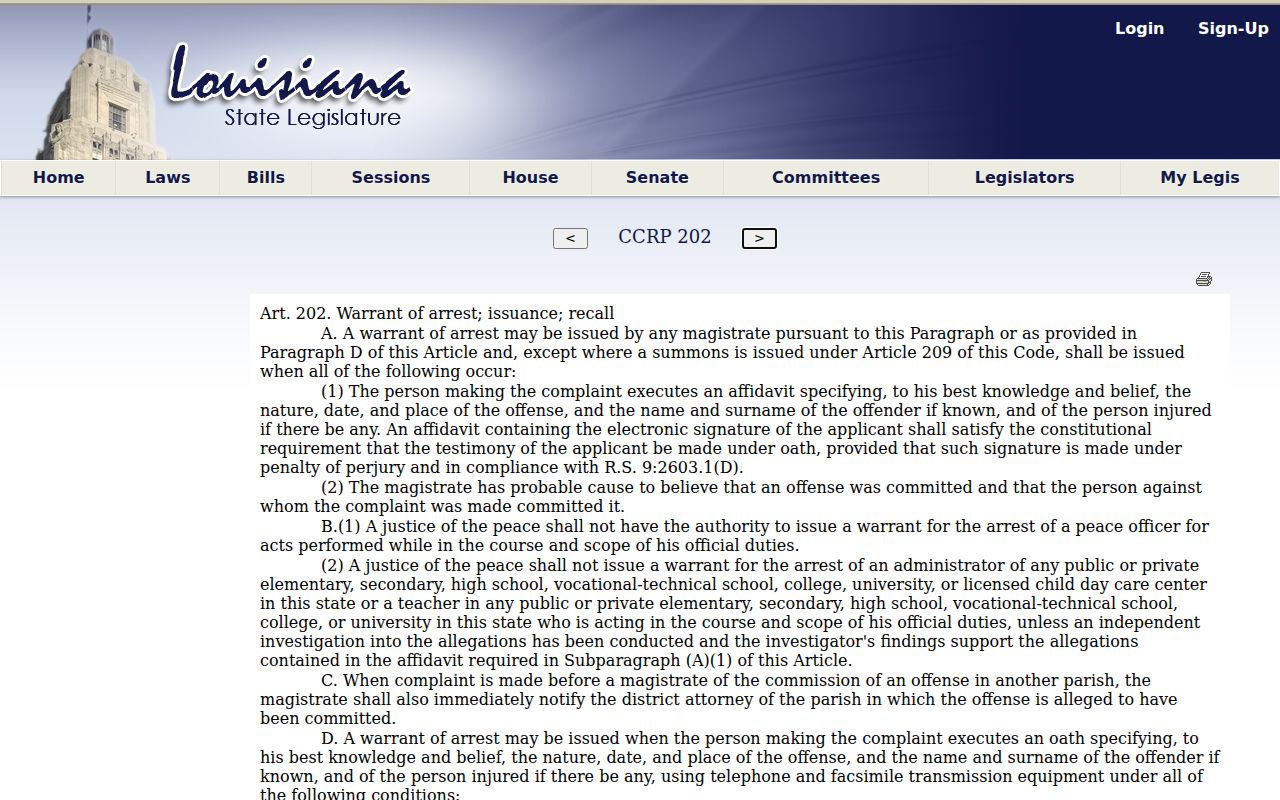
Probable cause is a judicial finding in Red River Parish. A records search alone will not explain why a warrant issued.
Arrest Warrants: What They Contain
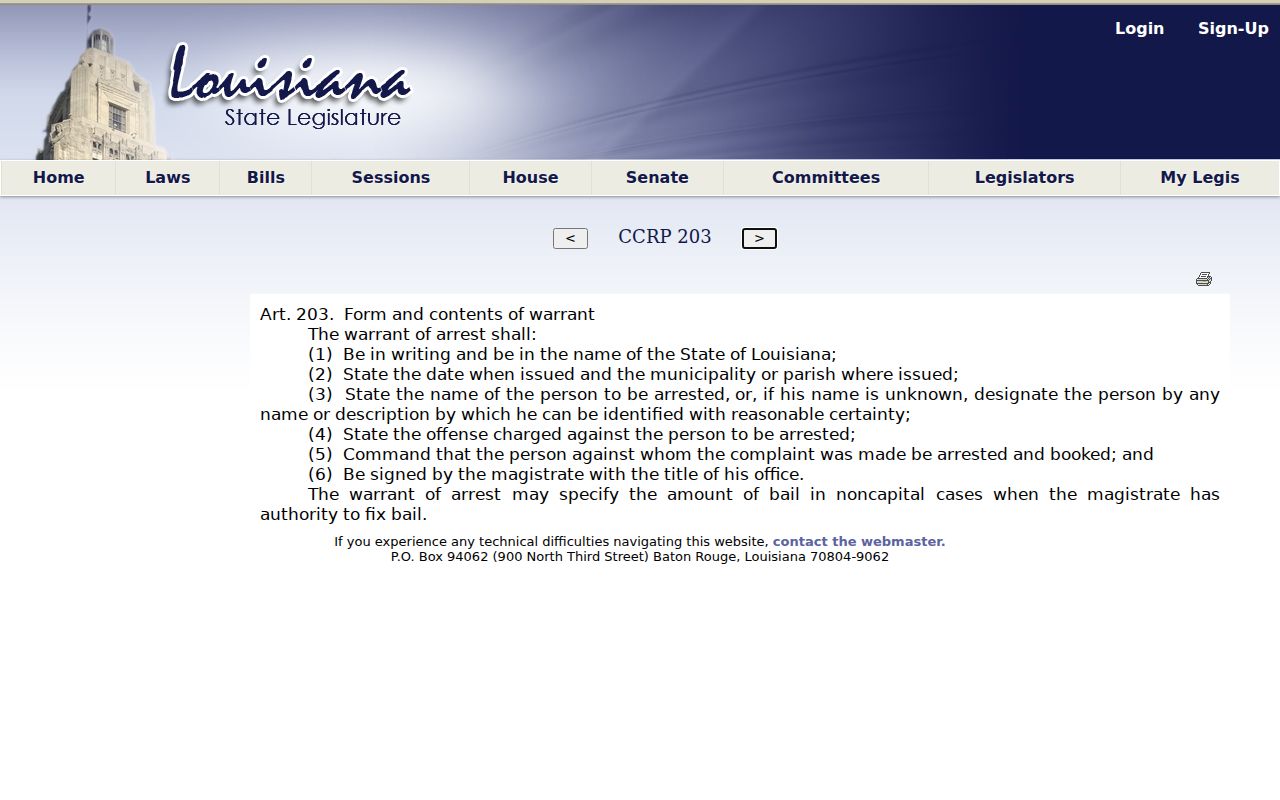
Article 203 fixes the required fields in a Red River Parish warrant. Knowing them helps before you ask the court to read a record aloud.
| Issuing State | The warrant is issued in the name of the State of Louisiana. |
|---|---|
| Date and Place | The issuance date and the parish or municipality. |
| Person Named | The person's name, or a description certain enough to identify them. |
| Offense | The offense charged. |
| Command | An order to arrest the person and bring them before the court for booking. |
| Signature and Bail | A magistrate signs, and bail may be written on the warrant in noncapital cases. |
A warrant is one part of a Red River Parish case file, not the whole story. Later entries can add bail, a hearing, or a dismissal.
Indictments, Informations, and Remote Affidavits
Not every arrest warrant begins with a citizen complaint. Article 496 requires the court to issue a warrant for a person charged by indictment or information who is not already in custody or at large on bail, unless a summons is used instead. So a formal charge filed by the district attorney can produce process with no preliminary street-level hearing at all. Article 202's remote process is the other practical detail. A magistrate may take an oath by telephone and rely on a signed declaration transmitted with the proposed warrant, provided the magistrate confirms receipt, legibility, and authenticity. The signed warrant remains the original process in Red River Parish. Together these provisions show why the paper trail matters more than the speed of the arrest. Note: A sealed indictment can exist before any public docket entry appears, so a blank search is not news that nothing has been filed.
How Warrants Get Served in Red River Parish
Service depends on who holds the assignment. Deputies of the Sheriff's Office execute parish process and run the jail, which is where booking and bond happen in Red River Parish. A town police department may serve process within its own municipality. A constable or another peace officer may carry out a warrant depending on the court and the district. No single published table maps every warrant to one agency. Article 211.1 gives an officer limited discretion in certain outstanding misdemeanor and traffic situations to issue a summons, arrange a release, or make an arrest. That discretion is not immunity from arrest, and it does not reach every charge. If you know a warrant exists, plan as though it can be served at any time.
Why ClerkNet May Show the Case but Not the Warrant
Louisiana requires district clerks to publish qualifying criminal minute entries electronically for cases filed on or after January 1, 2020. The statute lists what those entries can contain: arrest or summons information, custody and bail decisions, charge filings, hearings, and sentencing. It also says no other records or images must be published. So a reader can find a case and still not see the warrant image. Investigative material, sealed process, and juvenile records sit outside public view for separate reasons. Treat a case hit as a lead, and treat a missing warrant image as normal. Then ask the Red River Parish Clerk's criminal department whether the docket shows active process.
Arrest Warrants, Summonses, and Bench Warrants
In Red River Parish, these three documents achieve different things, and the difference decides how a person should respond.
| Document | What It Does | If It Is Ignored |
|---|---|---|
| Arrest warrant | Authorizes custody on a charged offense | Arrest when an officer locates the person |
| Summons | Orders an appearance without immediate custody | May produce a warrant under failure-to-appear rules |
| Bench warrant | Responds to a missed court obligation | Further process and possible bail consequences |
A summons is the court's attempt to resolve a Red River Parish matter without an arrest. Missing one is a poor trade.
Out-of-Parish and Federal Warrants
A local search only goes so far. An out-of-parish warrant question has to be answered by the parish that issued it. The Red River Parish jail roster can flag an outside-agency detainer or an outside warrant category, and extradition rules shape what happens after an arrest. Still, only the issuing jurisdiction confirms the status. Call the Sheriff's Office for the custody side and the originating parish for the warrant itself. Federal warrants sit on separate ground entirely. Red River Parish falls in the Shreveport Division of the Western District of Louisiana, where federal process can stay sealed until it is served. Deputy U.S. Marshals and task-force partners execute those warrants, and the federal court or your counsel confirms the record. No local court search can certify that a federal warrant is absent.
Handling an Arrest Warrant in Your Name
A recall motion, an arranged surrender, or bond after custody are the practical paths. An attorney is the one who can ask a Red River Parish court which it will accept.
- Confirm the warrant, the court, and the case number before doing anything else.
- Ask whether the court permits a recall, a walk-through, or an agreed surrender.
- Ask the jail about current bond, holds, and accepted payment methods.
- Arrange the appearance with counsel rather than in a traffic stop.
Important: A bond release does not dismiss the charge, and a payment to the wrong office does not clear an arrest warrant.
Bond Amounts Are Court-Specific
Red River Parish publishes no parish-wide bond schedule. The judge sets the figure. It depends on the offense, the court, and the judge, and the warrant itself may carry a number a magistrate set. The Sheriff's corrections page links an approved bond-person list, but it warns bond information can lag, so the jail should confirm any amount before money moves. Ask four questions first: what is the current amount, what bond types the jail accepts, whether another agency hold blocks release, and who updates the court record afterward. Keep every receipt. One caution. A surety provider on the official list is not guaranteed to be able to post bond in a given case.